Choosing the right size is one of the most important parts of buying baby clothing. A romper may look adorable, feel soft and have an attractive design, but if it does not fit properly, it can make everyday activities uncomfortable for your baby. Tight neck openings, restrictive leg holes and insufficient diaper space are common fitting problems that parents should check before purchasing.
When shopping for Baby Rompers, parents often focus on age labels such as 0–3 months, 3–6 months or 6–9 months. However, age-based sizing is only a starting point. Babies grow at different rates, and their body proportions can vary even when they are the same age. A romper that fits one baby comfortably may feel too tight or too loose on another.
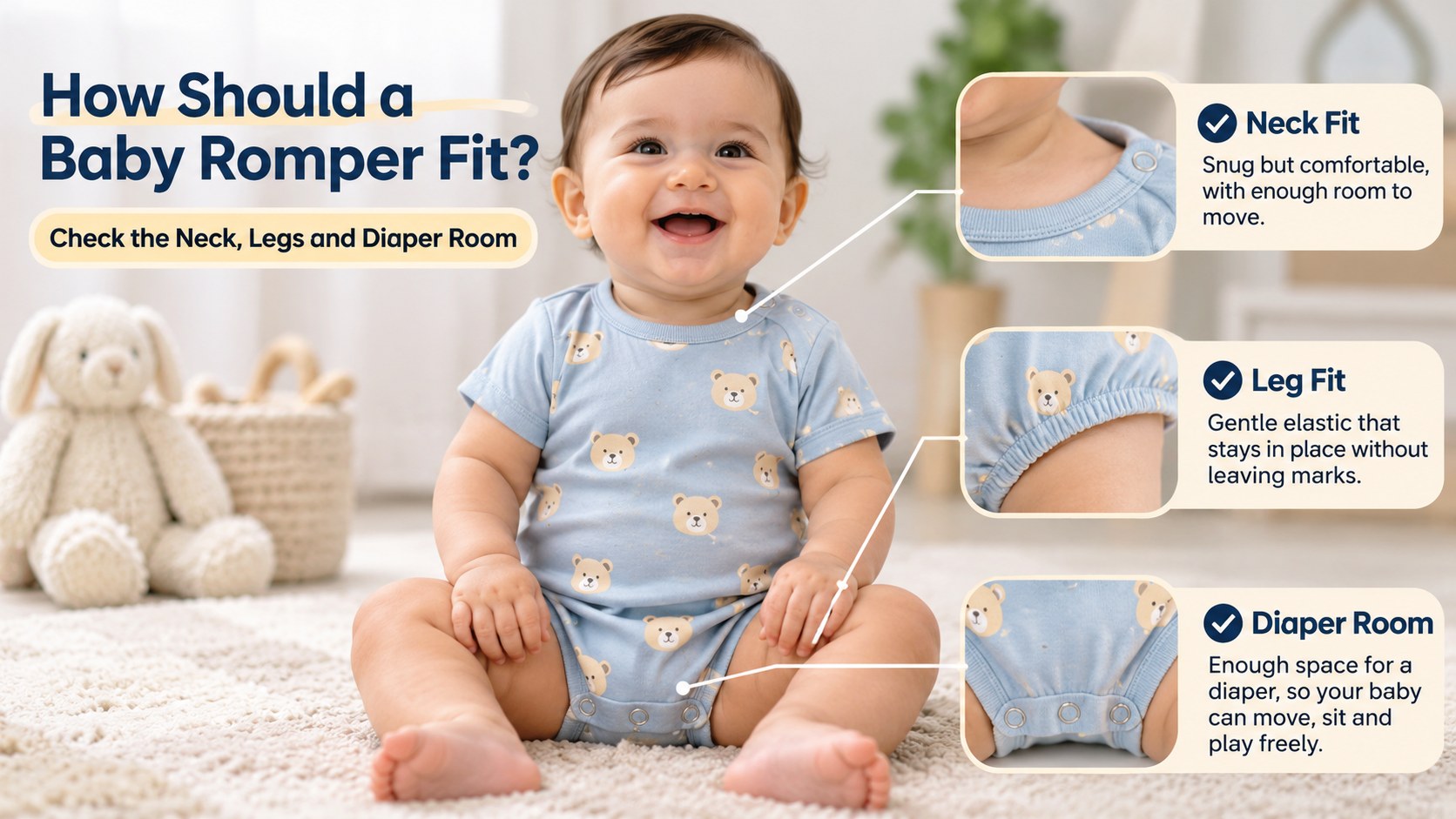
The right baby romper should provide enough room for natural movement without looking excessively oversized. Three areas deserve particular attention: the neck opening, leg openings and diaper space. The length, shoulder fit and fabric stretch also play an important role.
This guide explains how to check baby romper sizing, identify common fitting problems and choose comfortable baby clothes for everyday use.
Why Proper Baby Romper Fit Matters
A well-fitted romper makes dressing, changing diapers and moving around easier. Babies spend much of their time sleeping, stretching, kicking and exploring their surroundings. Their clothing should accommodate these activities without creating unnecessary pressure.
A romper that is too small may pull around the shoulders, restrict leg movement or make diaper changes difficult. On the other hand, an excessively loose romper may bunch up around the waist and legs, making it less practical for daily wear.
Here are some reasons why proper sizing matters:
-
Comfortable movement: Babies need enough space to stretch their arms, bend their knees and move their legs freely.
-
Easy diaper changes: Adequate room around the lower body makes diaper changes more convenient.
-
Better neck comfort: A properly sized neckline should allow easy dressing without pressing against the baby's neck.
-
Suitable body coverage: The romper should cover the torso and bottom without constantly riding up.
-
Better everyday usability: Comfortable clothing is easier to use during playtime, naps and outings.
When buying baby rompers, checking these fitting details is especially important because parents cannot physically examine the garment before ordering.
1. Check the Neck Opening: It Should Be Comfortable, Not Tight
The neck opening is one of the first areas to inspect when choosing a baby romper. If the neckline is too narrow, dressing your baby can become difficult. It may also cause unnecessary friction around the neck.
A good neckline should provide enough room for the baby's head to pass through comfortably while maintaining a suitable fit around the shoulders.
Signs That the Neck Opening Fits Properly
Look for these features:
-
The neckline stretches sufficiently during dressing.
-
The fabric does not press tightly against the baby's neck.
-
The opening returns to its original shape after stretching.
-
The neckline does not sit unusually low or expose too much of the chest.
-
There are no rough seams or irritating fabric edges around the neck.
Understand Different Neckline Designs
Different romper designs offer different levels of dressing convenience.
Envelope Neckline
Envelope necklines feature overlapping fabric panels around the shoulders. They can expand when dressing the baby and make it easier to move the garment over the head.
Round Neckline
Round neck baby rompers have a simple, traditional design. Check the opening's stretch and overall dimensions to ensure that it is not difficult to put on or remove.
Front-Open Rompers
Front-open designs feature buttons, snaps or zippers that reduce the need to pull clothing over the baby's head. They can be particularly convenient for newborns and younger babies.
Common Neckline Fitting Mistake
Some parents assume that a tight neckline will become comfortable after a few washes. However, this is not a reliable sizing strategy. Fabric may shrink, stretch or change depending on its construction and care instructions.
Always choose a neckline that provides comfortable movement and easy dressing from the beginning.
2. Check the Leg Openings: Avoid Tight Thighs and Loose Edges
The leg openings are another important part of baby romper sizing. These areas should provide enough room for the baby's thighs without being excessively loose.
Babies frequently kick, bend their knees and move their legs while lying down or playing. Tight leg openings can make these movements uncomfortable.
How to Check Leg Fit
When evaluating baby romper leg openings, consider the following:
-
The fabric should not dig into the thighs.
-
Elastic should feel gentle rather than restrictive.
-
The leg openings should not leave deep pressure marks.
-
The romper should allow comfortable knee movement.
-
The edges should not roll or bunch excessively.
-
The garment should stay reasonably positioned during normal movement.
Babies with fuller thighs may need rompers with more generous leg openings. This is why selecting clothing based only on age can sometimes lead to poor fitting.
Why Elastic Quality Matters
Some baby rompers use elastic around the leg openings to maintain their shape. Elastic can help keep the garment in place, but its tension and construction matter.
Before buying, look for:
-
Soft elastic that does not feel overly tight.
-
Smooth stitching around the leg openings.
-
Enough fabric width to accommodate the baby's thighs.
-
Comfortable finishing without rough edges.
Avoid choosing a romper simply because the leg openings look snug. A comfortable fit should not depend on excessive compression.
3. Check Diaper Room: Your Baby Needs Enough Space
Diaper room is one of the most overlooked factors when buying baby rompers.
A romper may fit comfortably around the chest and shoulders but still feel tight around the bottom. This often happens when the garment does not provide sufficient space for a diaper.
Babies wear diapers throughout much of their early childhood. The clothing must accommodate the diaper without pulling tightly across the crotch or lower body.
Signs of Insufficient Diaper Space
Check for these common fitting problems:
-
The fabric pulls tightly around the crotch.
-
The bottom snaps are difficult to close.
-
The romper rides up when the baby moves.
-
The diaper pushes against the fabric.
-
The garment creates noticeable tension around the lower body.
-
The baby has restricted leg movement because of the tight fit.
If you notice these issues, consider moving up a size or choosing a romper with a roomier bottom design.
Look for Convenient Snap Closures
Many baby rompers feature snap buttons along the crotch. These are useful because parents can change diapers without removing the entire outfit.
When choosing a snap-button romper, check that:
-
The snaps align without pulling the fabric.
-
There is enough space between the closures.
-
The crotch area does not become stretched when fastened.
-
The snaps are securely attached.
-
The closures are easy for parents to operate.
A well-designed snap closure can make daily diaper changes much more convenient.
Consider Different Diaper Types
Disposable and cloth diapers can have different levels of bulk. Cloth diapers, in particular, may require additional room around the bottom and thighs.
If your baby uses cloth diapers, look for a baby romper with a more generous crotch area and comfortable leg openings.
Do not assume that every romper in the same age category will accommodate every diaper style equally well.
4. Check the Overall Length and Shoulder Fit
Although the neckline, leg openings and diaper room deserve special attention, the overall length of a romper also determines how comfortably it fits.
A romper that is too short may pull around the shoulders and crotch. A garment that is too long may bunch up around the legs or waist.
Shoulder Fit
The shoulder seams should sit comfortably without pulling towards the neck or hanging excessively down the arms.
If the shoulders appear stretched or the sleeves pull when your baby moves, the romper may be too small.
Torso Length
Check whether the garment provides enough length between the shoulders and crotch.
Your baby should be able to lie down, stretch and bend their legs without the romper pulling tightly across the body.
Sleeve and Leg Length
For full-sleeve or full-length baby rompers, make sure the sleeves and legs do not restrict movement.
Avoid sleeves that cover the baby's hands or leg openings that bunch excessively around the ankles.
Remember that different romper styles have different intended fits. A short-sleeve summer romper and a full-length sleepwear romper may not have identical proportions.
5. Choose the Right Baby Romper Size Based on Measurements
Age labels are useful, but they should not be the only factor when selecting baby clothes.
A baby's height, weight and body proportions offer additional information about the size they may need.
Before purchasing baby rompers online, check the brand's size chart and compare it with your baby's current measurements.
Important Measurements to Check
Baby's Height: Measure from the top of the head to the heel while the baby is lying comfortably. Use the brand's recommended measurement method when comparing sizes.
Baby's Weight: Weight can help identify the appropriate size category, especially when a brand provides weight-based recommendations.
Chest Measurement: Measure around the fullest part of the chest without pulling the measuring tape tightly.
Torso and Crotch Fit: Pay attention to the garment's body length and available space around the diaper area.
Should You Buy a Bigger Size?
Buying a slightly larger size can be practical when your baby is growing quickly. However, choosing a size that is significantly oversized may affect comfort and usability.
Consider sizing up when:
-
The current romper is becoming tight around the chest.
-
The crotch area has insufficient diaper space.
-
The leg openings leave pressure marks.
-
The shoulder seams are pulling.
-
The romper frequently rides up during movement.
Do not size up automatically just because you expect your baby to grow. Check the actual garment measurements and consider how the romper will be used.
6. Fabric and Stretch Also Affect Romper Fit
Two rompers with identical measurements can feel different depending on their fabric.
The material determines how the garment stretches, how it sits against the skin and how it behaves after washing.
Cotton Baby Rompers
Cotton is a popular choice for everyday baby clothing because of its soft feel and breathable construction.
Cotton baby rompers are suitable for regular wear, provided the fabric quality and garment construction are appropriate.
Cotton Stretch Fabric
Some baby rompers include elastane or other stretch fibres. These fabrics can provide additional flexibility around the shoulders, torso and legs.
They may be useful for babies who move frequently or need additional ease around certain body areas.
Lightweight Fabric for Warm Weather
For warmer conditions, lightweight fabrics can help make clothing more comfortable.
Look for breathable materials, suitable coverage and a design that does not feel restrictive.
What to Check Before Buying
Regardless of fabric type, inspect:
-
Fabric composition.
-
Stitching quality.
-
Seam finishing.
-
Stretch and recovery.
-
Washing instructions.
-
Potential shrinkage after washing.
At KayoBaby, parents can consider these practical features when exploring baby clothing options, rather than choosing a romper based on appearance alone.
7. Common Baby Romper Fitting Mistakes Parents Should Avoid
Even when parents choose the correct age category, small fitting mistakes can affect everyday comfort.
Here are some common problems to avoid.
Choosing a Size Based Only on Age
A six-month-old baby may not have the same height or body proportions as another baby of the same age.
Always compare the available size chart with your baby's measurements.
Ignoring the Diaper Area
A romper should accommodate the diaper without creating tension around the crotch.
Check the bottom closures before deciding that the garment fits correctly.
Selecting Tight Leg Openings
Leg openings that leave deep marks or restrict movement are signs that the garment may be too small or poorly proportioned.
Ignoring Fabric Shrinkage
Some fabrics may shrink after washing, depending on their composition and care requirements.
Read the washing instructions before purchasing and avoid assuming that the original measurements will remain unchanged.
Buying Excessively Loose Clothing
Larger is not always better. Excess fabric can bunch around the waist, legs and shoulders.
Choose a size that provides comfortable room for growth without compromising the garment's intended fit.
Overlooking Snap and Button Quality
Closures are used frequently during dressing and diaper changes. Weak snaps, rough edges and difficult fasteners can make a romper less practical.
Always check garment construction and closure quality.
8. How to Check Baby Romper Fit After Receiving an Online Order
Shopping online is convenient, but parents should inspect the garment after delivery before using it regularly.
Follow these practical steps:
-
Check the size label: Confirm that the received size matches your order.
-
Inspect the fabric: Look for rough seams, loose threads and uncomfortable finishing.
-
Check the neckline: Ensure that the opening provides sufficient room for dressing.
-
Inspect the leg openings: Make sure the elastic is not excessively tight.
-
Check the crotch area: Confirm that the diaper space and snap closures provide enough room.
-
Review the care instructions: Follow the recommended washing method before regular use.
-
Check the fit again: After washing, inspect the garment for changes in shape or size.
Always follow the retailer's return and exchange policy. If the romper is too tight or uncomfortable, exchanging it for a more suitable size is generally better than continuing to use it.
9. What Should You Consider When Buying Baby Rompers Online?
Finding the right baby romper involves more than choosing an attractive print or colour. Parents should evaluate practical features that affect everyday use.
Here are the most important buying considerations:
Size Availability: Look for a brand that provides clear size options and a detailed sizing guide.
Fabric Quality: Choose suitable fabrics with comfortable textures and appropriate breathability.
Neckline Design: Consider envelope necklines or front-opening designs if easy dressing is a priority.
Diaper-Friendly Construction: Look for adequate crotch space and convenient snap closures.
Leg Opening Design: Ensure that the leg openings offer sufficient room without being excessively loose.
Stitching and Finishing: Examine seams, buttons, elastic and other construction details.
Care Requirements: Check whether the romper is easy to wash and maintain.
Price and Value: Compare the garment's fabric, construction, design and expected frequency of use instead of choosing solely by the lowest price.
Parents exploring Baby Rompers Online should also review product photographs, descriptions and available size information before placing an order.
KayoBaby offers parents another option to explore when shopping for baby clothing. Comparing available designs and checking the sizing details can help narrow down the most suitable choice for everyday wear.
Frequently Asked Questions About Baby Romper Fit
1. How Should a Baby Romper Fit?
A baby romper should fit comfortably around the neck, shoulders, chest and legs while providing enough room for diaper use. It should allow your baby to stretch, kick and move without pulling tightly against the body.
2. How Do I Know If My Baby's Romper Is Too Small?
Common signs include a tight neckline, stretched shoulder seams, restrictive leg openings, insufficient diaper space and difficulty fastening the bottom snaps. If the romper constantly rides up, it may also be too short.
3. Should Baby Rompers Be Tight or Loose?
Baby rompers should have a comfortable fit with enough room for natural movement. They should not be tight around the thighs, chest or crotch, but they should also not be excessively loose.
4. How Much Diaper Room Should a Baby Romper Have?
A romper should accommodate the baby's diaper without pulling across the crotch or making the bottom closures difficult to fasten. The exact amount of space depends on the diaper type and garment design.
5. Should I Size Up When Buying Baby Rompers?
You can consider sizing up if your baby is between sizes or the current garment is becoming restrictive. However, check the brand's size chart before purchasing to avoid choosing clothing that is excessively large.
6. Why Does My Baby's Romper Ride Up?
A romper may ride up because it is too short, has insufficient crotch space or does not provide enough room for the baby's movement. Check the torso length and diaper area before selecting another size.
7. Are Cotton Baby Rompers Good for Everyday Wear?
Cotton baby rompers are a popular everyday clothing option because of their soft feel and breathable properties. However, parents should also check fabric quality, stitching, fit and washing instructions.
8. What Is Better for Newborns: Front-Open or Over-the-Head Rompers?
Front-open rompers can make dressing and changing easier because parents do not need to pull the garment over the baby's head. Over-the-head designs can also work well when they have sufficiently flexible neck openings.
Conclusion: Choose Baby Rompers That Fit Comfortably
The right baby romper should make everyday dressing easier while allowing your baby to move comfortably. Before purchasing, pay close attention to three important areas: the neckline, leg openings and diaper room. Also check the overall length, shoulder fit, fabric quality and sizing information.
Remember that age-based size labels are only a starting point. Your baby's actual measurements and body proportions should guide your final decision.
When shopping for Baby Rompers, focus on practical features rather than appearance alone. Explore the baby clothing collection at KayoBaby, compare available designs and review the size information to find a suitable option for your baby's everyday wardrobe. A comfortable fit can make a meaningful difference in how easily your baby wears and moves in their clothes.