Choosing clothes for a baby girl can be exciting, but finding the right size is not always as simple as it seems. Babies grow quickly, and clothing sizes can vary between brands. A romper that looks perfect online may feel too tight, too loose, too short, or uncomfortable once your baby wears it.
Rompers are a popular choice for babies because they combine comfort and convenience in one outfit. They are suitable for playtime, outings, relaxed days at home, and many other everyday occasions. However, the benefits of a romper depend greatly on getting the right fit.
When shopping for baby girl rompers, parents should look beyond the age printed on the label. Your baby's height, weight, body shape, fabric, design, and room for movement can all influence which size works best.
Here is a simple guide to help you choose the right size romper for your baby girl.
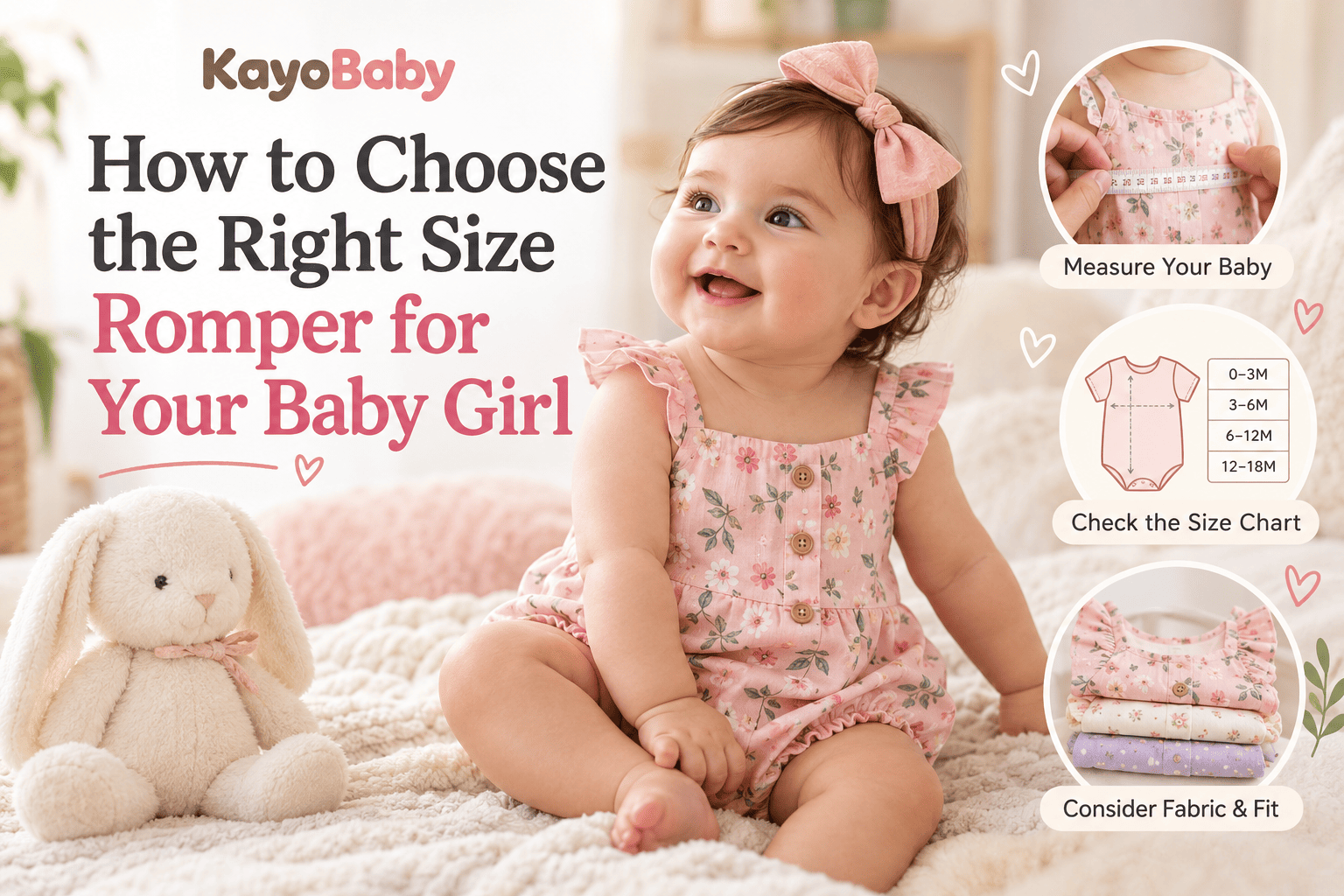
Why Is the Right Romper Size Important?
Babies spend a large part of their day moving, sleeping, stretching, crawling, or playing. Their clothes should allow these movements comfortably.
A romper that is too small may feel restrictive around the shoulders, thighs, waist, or diaper area. It may also make dressing and diaper changes more difficult. On the other hand, an excessively loose romper may not provide a comfortable or practical fit.
Choosing an appropriate size gives your baby enough space to move while helping the outfit sit properly on her body.
The goal should be a comfortable fit rather than simply choosing a size based on age.
Do Not Rely Only on the Age Label
One of the most common mistakes parents make when buying baby clothes is relying entirely on age labels.
Sizes such as 0–3 months, 3–6 months, 6–12 months, and 12–18 months are useful starting points, but they are not exact measurements. Two babies of the same age can have very different heights and body proportions.
Similarly, sizing standards may differ from one clothing brand to another.
For example, your six-month-old baby may fit comfortably into a 6–9 month size from one brand but require a larger size from another.
Before purchasing baby girl rompers, check the brand's size chart instead of selecting a size only according to your baby's age.
Measure Your Baby Before Buying
Taking a few basic measurements can make choosing the correct size much easier.
You do not need complicated equipment. A soft measuring tape is usually enough.
Depending on the sizing information provided by the brand, you may need to consider:
Height
Measure your baby from the top of her head to the bottom of her heel. Height is particularly important for rompers because they cover much of the body in a single garment.
If the romper is too short for your baby's height, it may pull around the shoulders or diaper area.
Chest
Measure around the fullest part of your baby's chest without pulling the measuring tape too tightly.
There should be enough space for comfortable movement and breathing.
Weight
Many baby clothing size charts provide recommended weight ranges. Knowing your baby's current weight can therefore help you compare sizes more accurately.
Torso Length
The length of your baby's upper body can also affect how a romper fits. Babies with longer torsos may sometimes need a larger size even when their age and weight suggest a smaller option.
Once you have the measurements, compare them with the size chart provided for the romper you want to purchase.
Consider Your Baby's Body Shape
Age, height, and weight are helpful, but every baby's body is different.
Some babies have chubbier thighs, while others are slimmer or taller. Some may have longer legs or a longer torso.
If your baby has fuller thighs, check whether the leg openings provide enough room. If she is tall for her age, pay particular attention to the overall length of the romper.
A good fit should provide enough room without looking excessively oversized.
Leave Enough Room for the Diaper
A baby's romper needs to accommodate a diaper comfortably.
This is particularly important around the bottom and crotch area. A romper that fits well everywhere else may still be too small if there is not enough room for a diaper.
After putting the romper on, check whether the diaper area looks stretched or unusually tight. The fabric should not pull excessively around the snaps or leg openings.
If you use cloth diapers, you may need additional room because they can sometimes be bulkier than disposable diapers.
Pay Attention to the Fabric
The type of fabric can influence how a romper fits.
Soft and breathable fabrics are generally suitable for everyday baby clothing. Cotton, for example, is commonly used for baby rompers because it feels soft and comfortable.
Some fabrics also include a small amount of stretch, which can provide additional flexibility as your baby moves.
However, you should not depend on stretch to compensate for an incorrect size. Even a stretchy romper should fit properly without pulling tightly against your baby's body.
Always read the product details to understand the material before selecting a size.
Check the Neckline, Sleeves, and Leg Openings
A properly sized romper should feel comfortable at all key points of the garment.
Look at the neckline first. It should sit comfortably without appearing excessively tight.
If the romper has sleeves, make sure your baby can move her arms naturally. The sleeves should not dig into her skin.
Similarly, check the leg openings. They should provide enough space for kicking and movement without leaving deep marks on your baby's thighs.
These small checks can help you understand whether the overall size is suitable.
Think About Your Baby's Current Growth Stage
Babies grow rapidly, especially during their first year. This often makes parents wonder whether they should buy a larger size so the clothing lasts longer.
Choosing slightly more room can sometimes be practical, particularly if your baby is close to moving into the next size. However, buying a romper that is much too large may affect comfort and fit.
Check your baby's current measurements and compare them with the size range.
If your baby's measurements are near the upper end of one size, the next size may be worth considering. If she is comfortably within the middle of the recommended range, her current size may provide a better fit.
Look for Practical Closures
Size is not the only factor that affects how convenient a romper is.
Features such as snap buttons can make dressing and diaper changes easier. When looking at baby girl rompers, consider whether the closure design provides easy access without requiring you to remove the entire outfit every time you change a diaper.
Practical design becomes especially helpful when you are changing your baby several times throughout the day.
Check the Fit After Dressing Your Baby
Once your baby is wearing the romper, observe how it fits while she moves.
Check whether she can:
-
Move her arms freely
-
Kick and stretch her legs
-
Sit or crawl comfortably, depending on her age
-
Wear her diaper without excessive pressure around the bottom
-
Move without the garment pulling at the shoulders or crotch
Also check the skin after she has worn the romper for a while. Deep marks around the arms, thighs, waist, or neckline can indicate that the garment is too tight.
At the same time, make sure there is not so much loose fabric that it interferes with normal movement.
Consider the Season When Choosing a Size
Seasonal clothing choices can also influence fit.
During warmer months, lightweight rompers may be worn on their own. In cooler weather, parents may pair rompers with additional layers.
If you plan to add a thin inner layer, consider whether the romper provides enough room without becoming tight.
However, avoid choosing a significantly larger size just for layering. It is usually better to select clothing that fits appropriately and use suitable outer layers according to the weather.
Review the Size Chart Every Time You Shop
Even if you already know your baby's usual clothing size, checking the size chart is a good habit.
Sizing can vary between brands, designs, and product types. A size that worked perfectly for one romper may not fit exactly the same way in another design.
At KayoBaby, parents can review the available product and sizing information before selecting baby clothing. Taking a moment to compare measurements can reduce the chances of ordering a size that does not fit as expected.
Common Signs That a Romper Is Too Small
You may need to move to the next size if you notice that:
-
The snaps are difficult to close
-
The fabric pulls around the diaper area
-
The neckline or arm openings feel tight
-
The leg openings leave noticeable marks
-
Your baby cannot stretch comfortably
-
The romper looks too short through the torso
-
Dressing and undressing have become difficult
Babies grow quickly, so a romper that fitted well a few weeks ago may suddenly become too small.
Final Thoughts
Choosing the right size romper for your baby girl becomes much easier when you focus on her actual measurements rather than age alone.
Start by checking her height, weight, chest, and overall body proportions. Compare these measurements with the brand's size chart and remember to leave enough room for a diaper and natural movement. Fabric, design, closures, and your baby's current growth stage should also be considered.
Most importantly, observe how your baby looks and moves while wearing the romper. A good romper should allow her to stretch, kick, play, and relax comfortably.
With thoughtful sizing, baby girl rompers can become practical and comfortable additions to your little one's everyday wardrobe. Whether you are shopping for daily wear, outings, or a cute new addition to her clothing collection, choosing the right fit can help make every outfit more comfortable for your baby girl.